
Delhi Township City Directory Collections
Delhi Township has no single historical city directory shelf under one modern municipal label. The useful collection is spread across Cincinnati and Hamilton County runs because Delhi is an unincorporated township and many local addresses use Cincinnati as their postal city. The Cincinnati & Hamilton County Public Library Genealogy and Local History Department is the main research starting point. Its digital holdings, directories, maps, newspapers, and census material make it possible to test whether a volume actually includes the area and year in question.
| Historical collection | Documented coverage | Research holder | How to consult it |
|---|---|---|---|
| Cincinnati directories | Begins 1819, with many annual runs through 1945 and later holdings | CHPL and its Digital Collections | Search, browse, or download where digitized; check the page image |
| Hamilton County directories | 1887, 1889, 1891, 1893, 1897, 1899, 1901, 1905, 1907/08, 1909/10, 1911/12; 1939/40 county clue | CHPL and HCGS guidance | Confirm title and geographic coverage with the library |
| Williams' Cincinnati Directory | 1948 sample, 2,044 pages | CHPL Digital Collections | Alphabetical, street-guide, and classified portions are documented |
| Federal census schedules | 1790 through 1950 public range | National Archives and CHPL | Use as a dated household snapshot, not a current record |
These city directories are historical finding tools, not a present-day Delhi Township roster. Check the publication title, year, page, and area before linking an entry to the township. A Cincinnati title can be useful, but it does not automatically mean every Delhi road was included. The library's specialist collections provide the on-site alternative when a useful edition is not digitized.
Delhi Township Directory Years in CHPL
The CHPL catalog record for Williams' Cincinnati Directory, 1948 is a useful model for checking a source before drawing a conclusion. The catalog describes a 2,044-page volume with alphabetical private and business entries, householders, office and business locations, a full street and avenue guide, and classified material. Those sections make city directory research flexible: a surname can lead to a street, and a street can point back to a listing for the same year.
OCR helps locate a likely page, but it is not the citation. Read the image, transcribe carefully, and keep the title, year, page or image number, and access date with your notes. Initials, street abbreviations, and damaged scans can change a result. A surname that appears in a search snippet should be checked against the page before it is paired with another record.
The screenshot below shows the 1948 directory catalog record in CHPL Digital Collections.
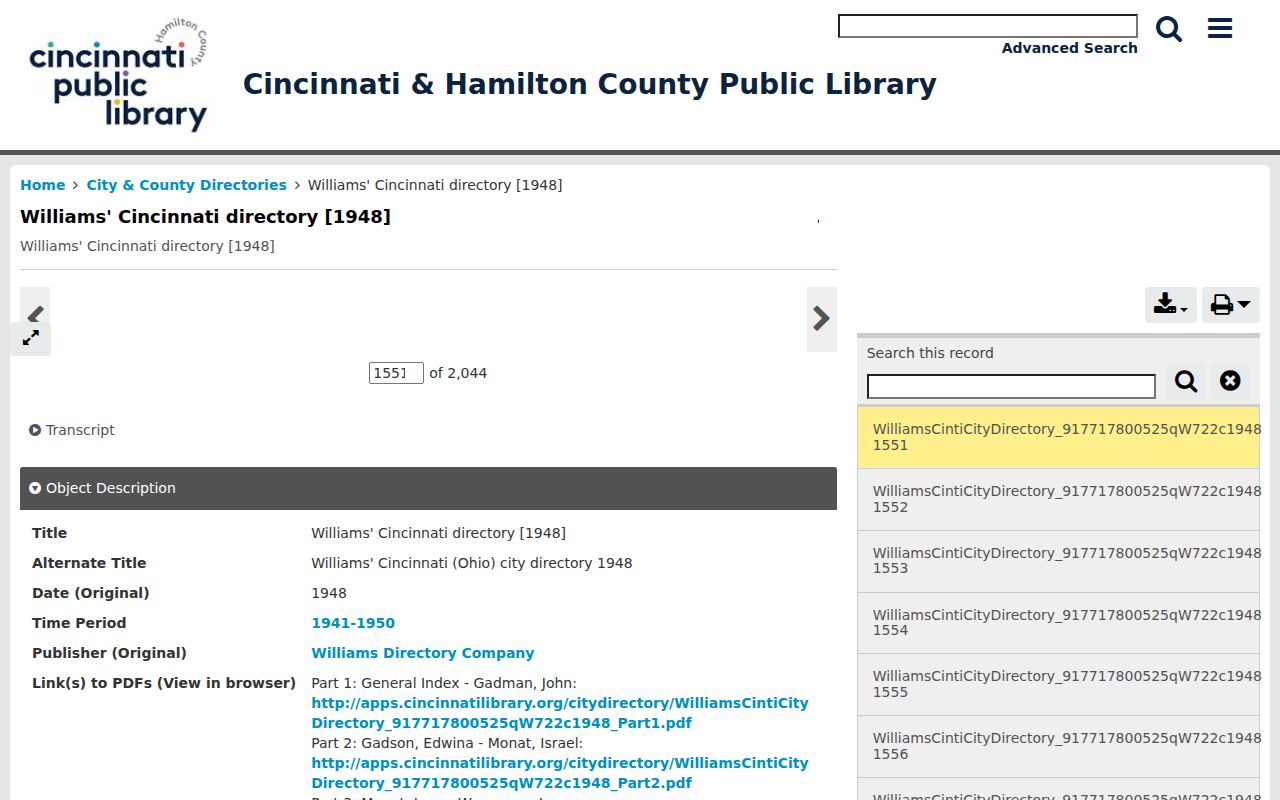
The catalog is evidence of a collection and its documented sections. It does not establish that a particular name, address, or household appears in the volume.
Reading a Delhi Township City Directory Entry
A historical city directory entry is compact, so each part needs a modest reading. Depending on the volume, it may show a surname, initials or forename, an address, an occupation or organization, a spouse or householder note, a business location, and a status mark. The captured CHPL catalog does not prove one universal layout for every year. Read the heading and abbreviation key in the exact volume before assigning a meaning to a symbol.
| Name form | Spelling, initials, or forename as printed in that year's volume. |
|---|---|
| Address line | A dated street or business location, which may use older formatting. |
| Activity notation | A listed occupation, organization, or business detail when the volume includes one. |
| Householder context | A spouse, householder, or residence-status notation only where the entry prints it. |
| Street guide | The street-order portion that can connect an address to that same year's listings. |
- Criss-cross directory
- An address-ordered directory section, often used to study a street in one dated volume.
- Householder index
- A listing arranged around a household or residence heading when the publisher included one.
- Abbreviation key
- The volume's own explanation of shortened words and marks. Photograph or note it before interpreting entries.
Keep a directory fact time-bound. A printed address records what the publisher placed in that edition; it does not prove identity, family ties, or a later address. When a name is common, compare spelling variants, nearby lines, source year, and a separate dated record.
Delhi Township City Directory Runs
The Hamilton County Genealogical Society directory guide gives the most concrete run list for county research. Cincinnati directories begin in 1819 and include many nineteenth- and twentieth-century editions. The guide also identifies Hamilton County volumes for 1887, 1889, 1891, 1893, 1897, 1899, 1901, 1905, 1907/08, 1909/10, and 1911/12. Its 1939/40 county-outside-Cincinnati clue can be especially useful for a Delhi-area question.
Later county and suburban material is held through CHPL and related collections. Before 1942, many Cincinnati editions can be searched, browsed, or downloaded through CHPL. For every find, verify the title's stated area. A rural legal description, a subdivision name, a Cincinnati mailing label, and Delhi Township can all refer to related geography without being interchangeable labels.
The image below links back to the Hamilton County Genealogical Society directory-holdings guide.
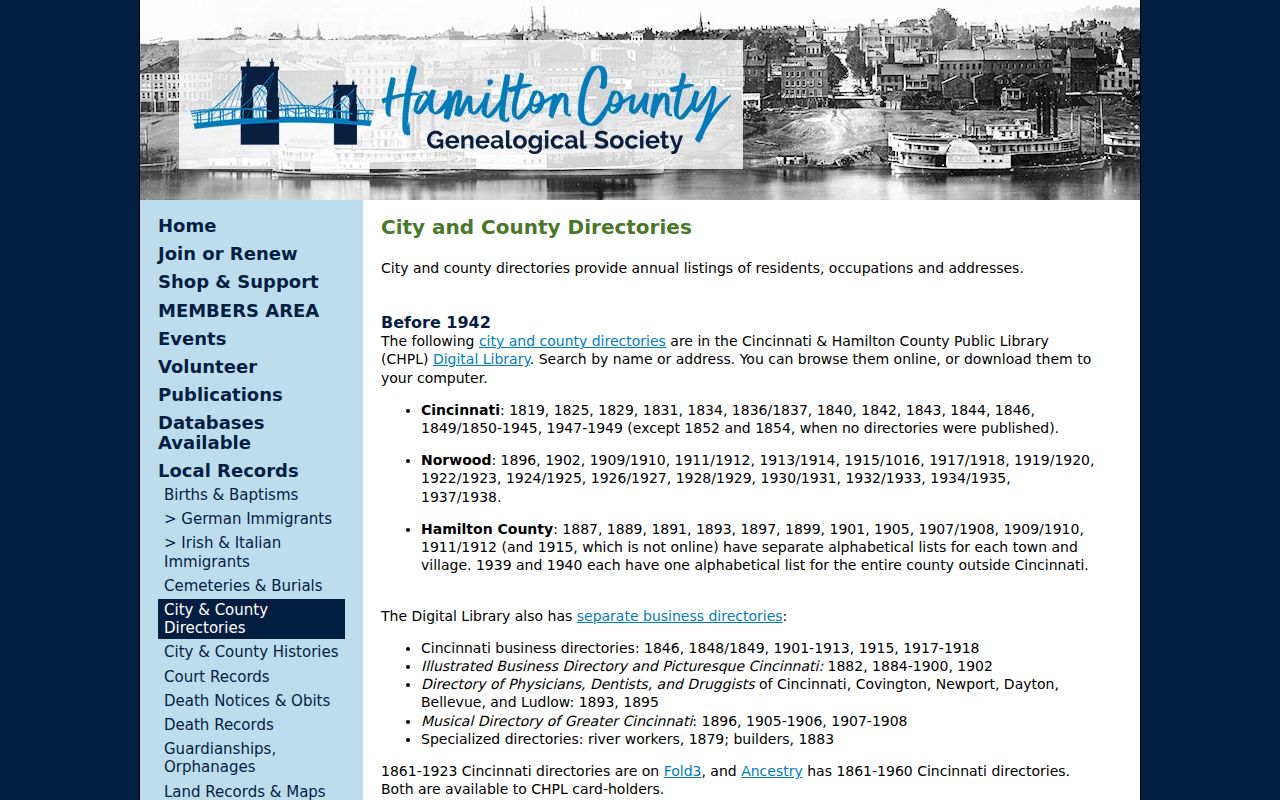
Use the guide to select a year and repository, then confirm the directory page itself. A stated run is a research route, not evidence about an individual entry.
Note: Directory coverage should be recorded by title and year because no source here confirms a complete Delhi Township run for every period.
Delhi Township City Directory Research Desks
Two local-history desks complement the printed city directories. CHPL offers genealogy and history assistance, census microfilm, digital local collections, newspapers, maps, and research help. Its service contact in the research file is research@chpl.org and 513-369-6909. The Delhi Historical Society Research Center and farmhouse at 468 Anderson Ferry Road adds farm, school, neighborhood, photograph, and place-history context. Its listed research hours are Tuesday, Thursday, and the first Sunday of the month, with appointment contact.
Ask the library or Historical Society for a named collection, a directory year, a map, a newspaper, or a local-history file. Neither desk is a way to verify a present-day household. The stronger question is narrow: whether a source identifies a street, farm, school, neighborhood, or family in a specified historic period.
The CHPL genealogy and local-history service appears below.
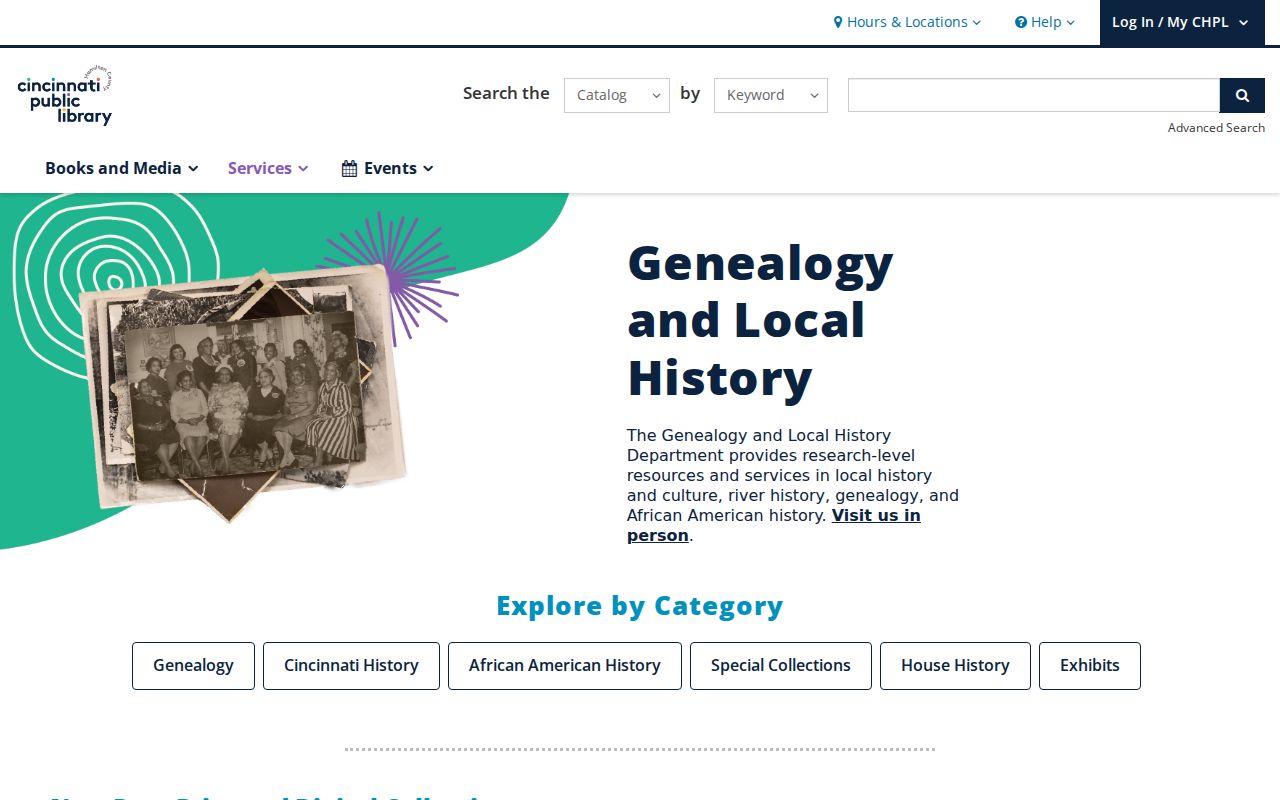
Library collections let a researcher compare directories with maps, newspapers, and census records instead of making one listing carry the whole conclusion.
The Delhi Historical Society research-center page is also shown here.
Its local collections supply community context that should be cited alongside, rather than substituted for, a dated directory or recorded land source.
Tracing Delhi Township City Directories
Use city directories as a sequence. First establish the correct township, postal, or county label for the year. Then trace the same spelling and address forward or backward through available editions. Pair a directory edition with a census year only as a dated comparison. National Archives census access reaches 1950, and the National Archives 1950 census resource explains that public boundary. A directory's street guide can help when the question begins with an old address rather than a surname.
- Choose a directory title and year that actually covers the relevant Cincinnati, county, or suburban area.
- Read both the alphabetical listing and the street guide where the volume includes them.
- Record the page image, printed spelling, address form, and every abbreviation that affects interpretation.
- Compare the date with a census, newspaper, map, or a Hamilton County Recorder reference, keeping each source in its own time.
- State an unresolved move, name change, or gap as unconfirmed rather than filling it with a modern assumption.
The CHPL house-history workflow joins property records, directories, maps, newspapers, and local history. For a modern parcel or street-record question, the separate Delhi Township street directory keeps the address-keyed county sources in their own workflow.
Delhi Township City Directory Record Gaps
Delhi directory research is shaped by local record history. Cincinnati directories begin in 1819, but their labels do not perfectly map to a modern Delhi Township postal address. County volumes, later suburban collections, street guides, and the 1941 Pink Pages or later criss-cross style material provide different kinds of access. The township's historic geography also moves from South Bend, founded in 1789, to Delhi Township, founded in 1816. Those names should be searched as historical place terms, not treated as competing jurisdictions.
Land research has its own break: the March 1884 Hamilton County courthouse fire damaged deed books, and some older volumes were copied or reconstructed. The Recorder describes an earliest roughly 1788 to 1823 A-W2 arrangement and later deed-book runs with online, microfilm, FamilySearch, and terminal routes. A missing directory or deed result can therefore be a coverage issue. Preserve the gap, look for the next verified source, and avoid turning an absence into a claim.
The screenshot below links to the Delhi Township public archive search.
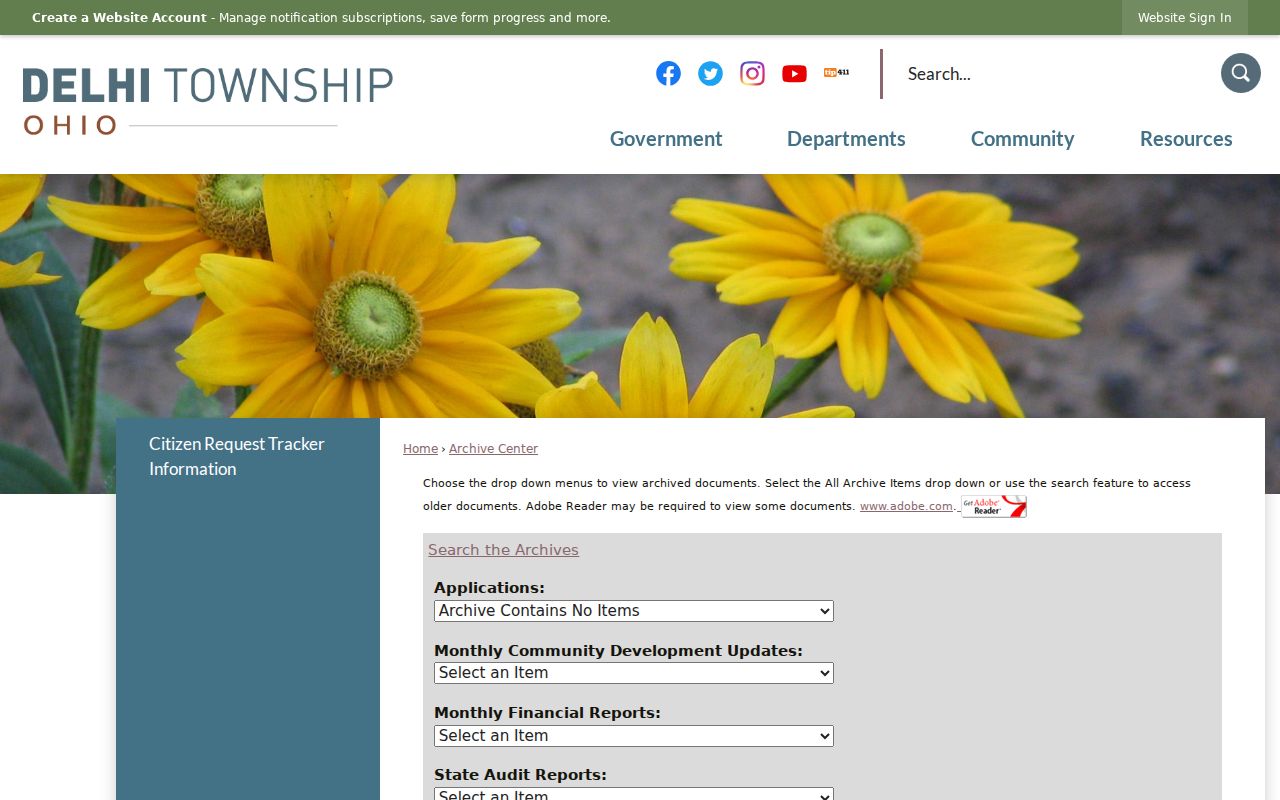
The township archive is a useful administrative-history route for a defined local document. It is separate from CHPL's directory shelf and from Recorder land records.
Delhi Township City Directory Place Names
Historical directories become more useful when read with Delhi's changing landscape. Township history describes South Bend, river geography, vineyard and dairy eras, later flower growing, and postwar subdivision growth. In the 1870s flower growing expanded, and more than fifty independent growers were described by 1940, the source of Delhi's "Floral Paradise" reputation. That local history can explain why a directory, map, newspaper, or farm reference uses a name that does not look like a current street label.
Use place history as context, not as a shortcut for naming people. The Historical Society can help identify farms, schools, photographs, and neighborhood development, while CHPL's 2025 Enquirer photo-archive milestone added more than 10,000 digitized photographs for local-history research. A researcher still needs the cited directory year, image, and related record before connecting a historical reference to a specific address.
The Delhi Township department and staff directory is pictured below.
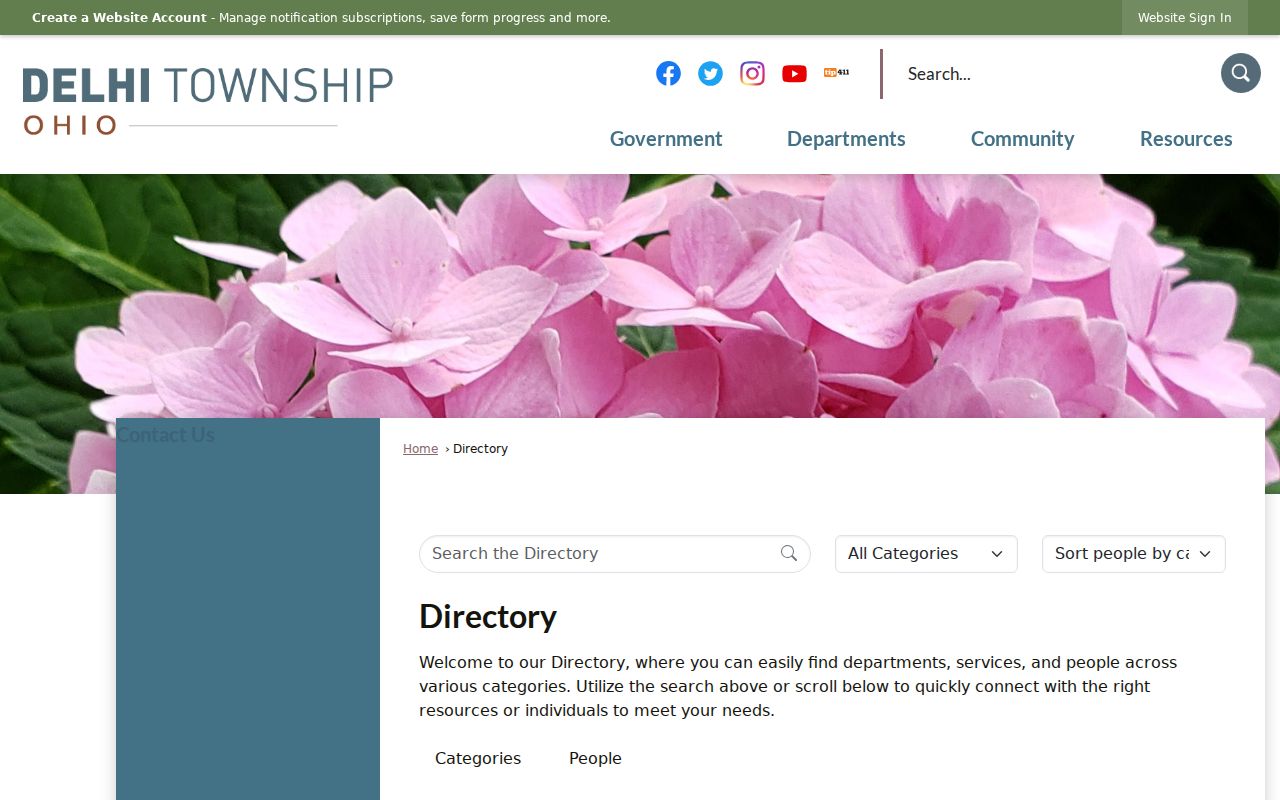
This official directory identifies township departments and staff contacts. It is not a historical city directory or a resident roster.