
Delhi Township Neighbor Block Sources
No single public record lists a Delhi Township block's residents. Each source covers one slice. The Hamilton County Auditor supplies parcel and property context, while CAGIS provides map orientation for the same ground. Recorder Acclaim indexes land instruments, the Board of Elections verifies registration for an exact address within election-law limits, and historic library directories can place an address in a stated year. Together these tools frame a street. They are not a roster of neighbors.
| Block source | What it can show | Access and limit |
|---|---|---|
| Auditor wEdge | Parcel ID, situs, listed owner or mailing, transfer and assessment context | Free property portal, not a household roll |
| CAGIS | Parcel-map orientation and county context | Public viewer; live layers and controls need verification |
| Recorder Acclaim | Instrument, indexed parties, legal description, date, book/page | Free index and available images, not a relationship record |
| Hamilton County BOE | Result for a complete entered registration check | Official, protected voters and confidential data excluded |
| CHPL directories | Historic address context depending on edition | Year-specific, incomplete, and image verification needed |
Begin with proof of place. A Cincinnati mailing address does not put a property inside township lines. Confirm jurisdiction with a current parcel card before anything else. The owner listed on that card may be an investor, a relative, or an estate. The tax mailing address can differ from the situs entirely. Neighborhood questions stay accurate when those gaps are respected rather than glossed over.
How you reach a record matters as much as which record you choose. The Auditor and Recorder both offer online indexes, which makes parcel and deed work fast. Township zoning questions travel a different road and need a defined record request. CHPL's historic holdings can call for a catalog search, image review, or help from staff. The Board of Elections lookup demands a complete, cleanly entered address. A blank result online can reflect a portal limit, an older preservation format, or statutory protection. That does not mean the record never existed.
Delhi Township Neighbor Parcel Context
The Hamilton County Auditor wEdge portal is the natural first stop for block context. It searches by owner or organization name, street address, parcel ID, sales history, and advanced property terms. Once you land on an address, record the parcel number, situs, legal description, and any transfer reference. Treat the property card as a starting point only. It cannot prove who lives at a property. It cannot count everyone there. It cannot reveal a social tie between neighboring parcels.
For a tight radius around one parcel, wEdge offers an Origin Property Key and Distance Feet method. Start from a confirmed parcel. Save the origin key. Pick a modest distance. Then inspect each returned parcel on its own card rather than skimming the list. Results stop at the first 1,000 matches. Use this as a geographic set for property research. Never use it as a way to label people living near a Delhi Township parcel.
Note: A homestead or exemption field is tax-administration data. It proves nothing about whether the listed owner occupies the parcel.
Map Delhi Township Neighbor Parcels
Delhi Township sends property researchers to CAGIS for parcel context. The county viewer layers ownership, transaction, and valuation details onto one map. Start with the wEdge parcel number to zero in on a block. CAGIS publishes no fixed map-control set. Tool names and popups vary with the live viewer. Treat any single block view as a starting point, not a survey of the street.
- Find the subject address in wEdge and save its parcel ID and legal description.
- Open CAGIS to see the parcel shape and adjoining parcel pattern.
- Return to wEdge one parcel at a time for property-card context.
- Use the origin-property key and a modest distance only if map controls do not supply a verified adjacent-parcel method.
- Use Recorder Acclaim only when a recorded land document is needed for a specific parcel or legal description.
Parcel and aerial lines are approximate. They are not a survey. A recorded deed or plat controls a boundary question. A survey backs that up when lines matter. To trace a full named-street record chain instead of one block, the Delhi Township street directory workflow fits better.
Keep the original address form paired with the parcel number. Delhi Township sits unincorporated inside Hamilton County. A Cincinnati postal-city label does not change that government identity. When an address seems to drift between source labels, trust the parcel number, legal description, subdivision lot, and date over a casual street-name match. Those identifiers stay stable while mailing names shift.
Delhi Township Neighbor Land Records
Once parcel research turns up an Auditor number, a legal description, a transfer date, or a document reference, Hamilton County Recorder Acclaim becomes the natural next stop. The index lets you search by name, record date, date range, document type, book and page, document number, subdivision and lot, section, town, and range, Auditor number, subdivision name, or certificate number. A single record might be a deed, a mortgage, a release, a plat, an easement, an affidavit, or some other instrument.
Keep expectations in shape here. The parties named on a land document describe a property transaction, not a neighborhood relationship. Address indexing is not universal, either. For anything recorded before mid-1988, the historic grantor and grantee index plus book and page are the required path. A line on a map is not a title opinion, and an index entry proves nothing about who lives on the street today, anyone's finances, or family ties.
Delhi Township Neighbor Election Boundaries
The Hamilton County Board of Elections registration check verifies one voter at a time. It asks for first name, last name, suffix, street number, street name, street suffix. It also wants a ZIP. A match returns the name and address, precinct, polling place or entrance. It also gives district details and ballot links. It does not browse a block. It cannot profile neighbors.
Ohio law keeps most election fields private. R.C. 3503.13 and R.C. 3503.153 bar public access to Social Security numbers, driver-license or state-ID data. They also protect phone, email, confidential voters, and protected-worker addresses. Participation history never shows a ballot choice or political belief. Precinct lines and polling places shift. A current Board of Elections result beats any static block claim.
Official voter-list exports exist at county, district, or precinct level on a stated update cadence. These are controlled election records, not raw material for a residents directory. A request should name the file, date, and format wanted.
Delhi Township Neighbor Civic Contacts
Delhi Township publishes no umbrella neighborhood-association directory, no public HOA member list, and no block-watch roster. The township's programs page names real civic resources. But it establishes no membership, residence, or household contact. Treat it as a public community contact route, not a way to find neighbors in Delhi Township.
| Public civic resource | What is supported | Appropriate route |
|---|---|---|
| Delhi Civic Association | Named on the township programs page | Use the township's public community-resource information |
| Citizen's Police Association | Named public organization | Do not treat public-safety forms as a neighborhood roster |
| Delhi Business Association and Kiwanis | Named civic resources | Use public organization contact pages when available |
| Delhi Historical Society | Local-history and genealogy resource | Ask about place history, not current household membership |
Delhi Township programs and services is the official starting point for these community names. Camera registration and vacation-check forms are sensitive service records. Neither is a neighborhood directory.
Delhi Township Neighbor Records Compared
Official records describe a defined transaction, parcel, or registration. Commercial lookup sites blend old and current data of unclear source and date. For a block question, trust the custodian's current system and note its limits. That habit separates property owners from tax mailing addresses. It also distinguishes a dated street directory entry from a current occupant.
| Source type | Best use | Key limit |
|---|---|---|
| Auditor property record | Parcel and transfer context | Listed owner or mailing is not a household roster |
| Recorder instrument index | Recorded-document retrieval | Not a title opinion or relationship record |
| BOE registration check | Exact entered-address verification | Protected data stays excluded; no ballot choice |
| Commercial lookup category | Not a substitute for official records | Accuracy, date, source, and lawful use may be unclear |
Some public records simply are not online. For those, file a narrow request under the Ohio Public Records Act, R.C. 149.43. Staff can help shape a request. An office that denies a written request must cite its legal authority. The Ohio Attorney General public-records guidance lays out the statewide access framework.
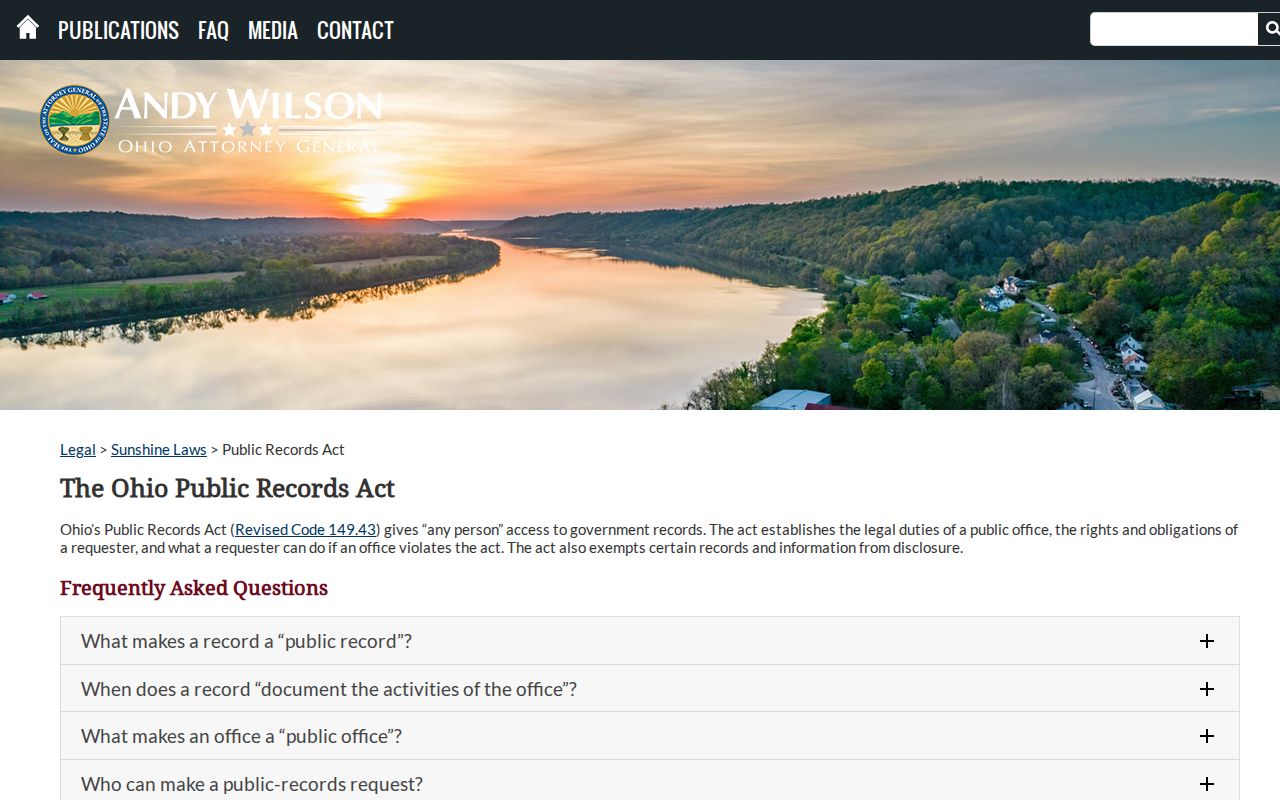
Access law opens the records office door, but privacy rules still cap what an office may disclose.
Privacy Limits for Delhi Township Neighbor Records
Knowing an address does not unlock a neighbor list. Protected addresses, renters, and other household members stay private. So do vehicle records, utility accounts, and delivery data. Private cameras and personal contact details stay private too. Ohio Safe at Home gives qualifying participants a substitute address for designated public purposes. R.C. 111.43 adds a real-property confidentiality-notice route after certification. Court sealing or other statutes can shield a record further.
R.C. 149.45 requires Social Security numbers to be redacted from Internet records. It also allows removal of personal information in specified cases. When a record needs redaction, use the government custodian's process. Never repost the material elsewhere. The Ohio's Internet-record redaction law link identifies the statutory line.
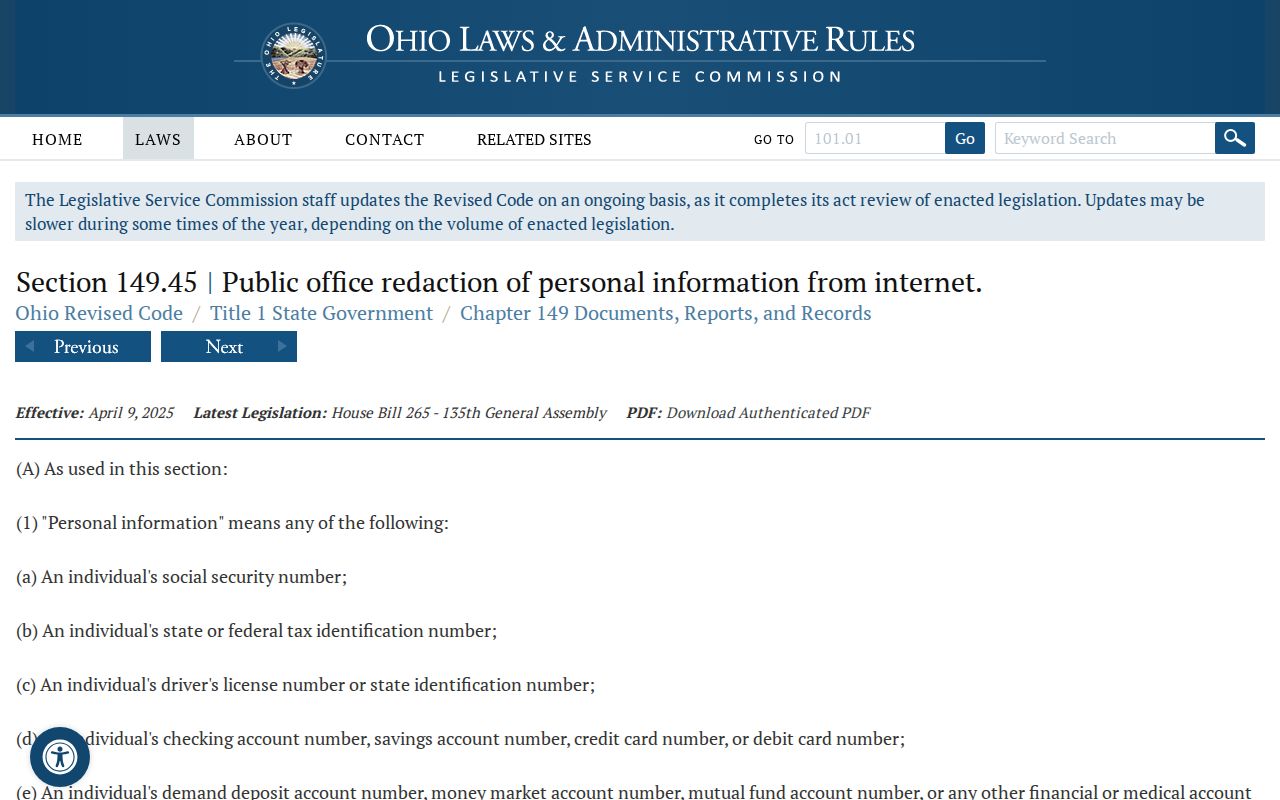
Note: redaction rules are one reason an official lookup may look limited or incomplete online.
R.C. 4501.27 places motor-vehicle personal information under a separate limit.
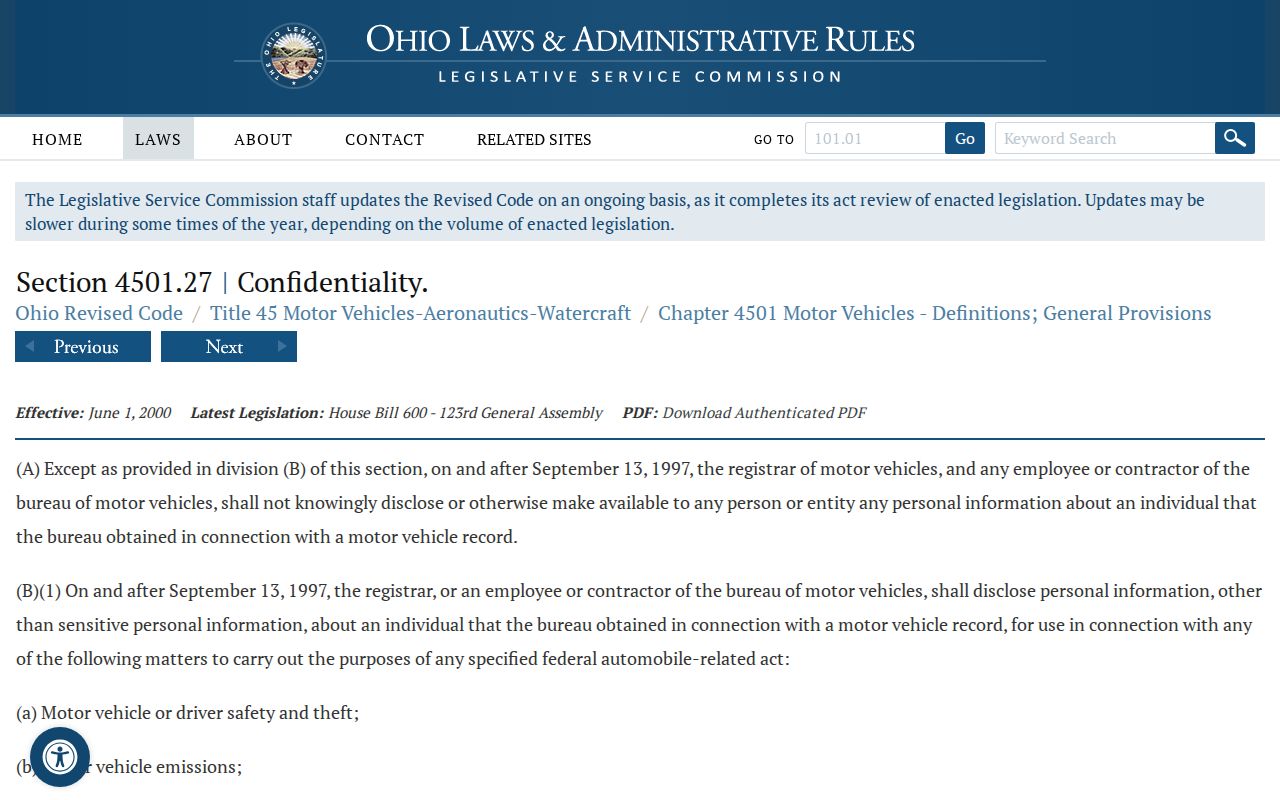
Vehicle data has no place in a block lookup or any Delhi Township neighbor record.
Lawful use. Delhi Township neighbor research is limited to careful property, civic, family-history, and personal-safety awareness. Do not use public records to watch, stalk, harass, intimidate, or harm anyone.