
Search Delhi Township Streets by Address
A Delhi Township address is best handled as a property research question. The Hamilton County Auditor wEdge system ties a street search to a parcel, situs address, listed owner or mailing address, transfer history, tax and value context. It does not establish who currently occupies the property. The Recorder, the election office, township zoning files, and historic directories each answer a narrower question at a different time.
For a street-by-street check, work in small address groups. The Auditor returns only the first 1,000 matches, and a street name can have more than one matching form. Save the exact street spelling selected by the system, the parcel number, and the legal description before moving on. A postal address using Cincinnati may still fall under Delhi Township government, so confirm township context through the parcel and local map sources rather than postal wording alone.
- Enter the number and street name in wEdge, then open the matching parcel card.
- Record the parcel ID, situs address, legal description, and transfer reference.
- Use CAGIS for parcel-map orientation, then return to wEdge for each individual property card.
- Search the Hamilton County Recorder Acclaim index by Auditor number, document number, or the legal-description trail.
- For a dated household question, compare a library directory or census source with its year and title.
That sequence keeps the search focused on records keyed to an address. A later document, tax mailing address, or directory entry should always be described by what it records, not treated as a current household claim.
Delhi Township Street Directory Fields
wEdge is the full address tool in this Delhi Township street directory. Its street search accepts an exact number or low and high number range, plus a street name entered without the suffix before choosing the returned street. Owner, parcel, sales, and advanced paths can help resolve an incomplete address, but the source itself warns against treating a name match as residence proof.
| wEdge field | How it works | Useful Delhi Township use |
|---|---|---|
| Street Number | Exact number or low/high range | Start a small stretch of a named street. |
| Street Name | Enter without suffix, then select a result | Match the Auditor's street form. |
| Parcel Number | Full or partial identifier, usually 13 characters | Carry the parcel into Recorder research. |
| Sales and Transfer Date | Tab or advanced date range | Find a recorded-transfer lead. |
| Origin Property Key and Distance | Advanced text and numeric fields | Make a limited nearby-parcel research set. |
The Auditor's property-search guidance distinguishes property facts from personal contact data. The Auditor does not maintain a public phone or email database apart from material embedded in scanned documents. A homestead or exemption entry is tax-administration information, not a promise that a listed owner is present at the situs address.
Note: Recheck the property card before relying on a transfer, value, exemption, or mailing field because those fields can change after the initial search.
Delhi Township Street Address Keys
Street research works better when three similar-looking fields stay separate. A situs address is the property location used by the Auditor. A mailing address is where tax correspondence goes and may be a trust, business, or a different city or state. A legal description is the lot, subdivision, or metes-and-bounds wording that links the parcel to a recorded instrument. Each has a place in a Delhi Township street search, but none answers every question.
- Parcel
- An assessment identifier for a defined piece of property. It helps join an Auditor card to Recorder research.
- Situs address
- The recorded location of a parcel, not proof of a current occupant or a precise surveyed boundary.
- Plat
- A recorded map or subdivision document. It can explain lots and streets, but it is not a replacement for a survey.
- Criss-cross directory
- An address-arranged historic directory that can place a household or business at an address for a stated year.
Old street forms deserve a second check. The research found no verified township-wide Delhi renumbering conversion. When modern formatting conflicts with a historic source, compare the legal description, subdivision lot, nearby landmarks, map, transfer date, and directory year. Leave an unresolved conversion unresolved rather than creating a modern equivalent.
Delhi Township Records by Street
Several official and research channels are address-linked, although no channel is a verified Delhi Township resident roster by street. The table separates their evidence. The Recorder holds instruments, the Auditor holds parcel context, the Board of Elections checks a supplied address, and township zoning can respond to a defined record request. Use the keeper that matches the question.
| Address-linked record | Keeper | What it can show | Access route |
|---|---|---|---|
| Property card and transfers | Hamilton County Auditor | Parcel, situs, listed owner or mailing, transfers, tax and value context | Free wEdge portal |
| Parcel-map context | CAGIS | Map orientation and parcel context | Public viewer, live controls should be checked |
| Deed or plat | Hamilton County Recorder | Instrument, indexed parties, legal description, date, book/page | Free Acclaim index and available images |
| Registration check | Hamilton County BOE | Official result for a complete entered address | BOE registration check |
| Zoning certificate or subdivision file | Delhi Planning & Zoning | Defined public address record and work or review context | Targeted request under the public-records policy |
The parcel number is often the strongest handoff. It links the property card to an instrument search, while the street name helps narrow the initial Auditor search. A BOE check requires first name, last name, street number, street name, street suffix, and ZIP, so it verifies an exact input rather than providing a browseable street roll.
Delhi Township Street Deed Trails
After wEdge supplies a parcel and a transfer lead, use Acclaim's Auditor Number first. If that does not locate the relevant document, try the document number or limit a search by date and document type. The Recorder entry can show an instrument number, recording date, document type, indexed parties, book/page reference, parcel or subdivision information, and an available image or detail page. It does not give a title opinion or establish a present occupant.
For deeds before mid-1988, the method changes. The Recorder says its name search generally works from 1988 forward. Earlier work uses the historic grantor and grantee index to obtain book and page, then the correct scan, microfilm, FamilySearch source, or Recorder terminal for that era. Search both directions: the seller in one transfer may be the buyer in the prior transfer. Keep confirming the same legal description or lot.
The Recorder's Auditor-number search shows why a parcel is a better starting point than a broad street-name hit. The address record trail can point to a chain of recorded land documents, but it should not turn those indexed parties into a household list.
Delhi Township Street Records Before 1988
Hamilton County's historic deed system has practical breaks that matter when tracing a Delhi Township address. Deed Books 21 through 4144 cover 1823 through 1988 in a mix of online books, microfilm, FamilySearch access, and terminal or book-page research. Books 21 through 237, dated 1823 through 1857, are online. Other ranges depend on their period and retrieval route. The Recorder's historic deed-book guide is the source to check before assuming a missing result is a missing record.
The March 1884 courthouse fire damaged deed books. Some records were copied or reconstructed, and a historic chain can contain damaged or destroyed-page notes. January 1 may appear as a filler date, while scanned pages can sit a page or two away from the expected image. Those details are reasons to preserve a book/page citation and inspect the image, not merely save a search snippet.
The older method is slower, but it is also more exact. Treat a gap as a research question for the Recorder, library, or archives rather than a conclusion about the street or a former household.
Delhi Township Street Maps and Permits
Delhi directs parcel researchers to CAGIS for county map context. Start with a confirmed wEdge address or parcel, use the map to orient adjoining shapes, then inspect each property through wEdge. The static research capture did not verify CAGIS layers, identify controls, buffer tools, or print behavior. Parcel and aerial lines are approximate, so a recorded deed, plat, and survey control a boundary question.
Delhi Planning & Zoning is another address channel for a defined zoning certificate or subdivision-review record. Its certificate form distinguishes the applicant's role from owner and property information. A response can date an application or approval, but proposed work and an applicant name do not prove who occupies a property. No online Delhi code-enforcement case search was verified.
A direct request can name the address, record type, date range, and preferred electronic delivery under Ohio Public Records Act, R.C. 149.43. That narrower route is more useful than asking the township to assemble a street list.
Delhi's zoning-map page directs property researchers toward its zoning materials and CAGIS.
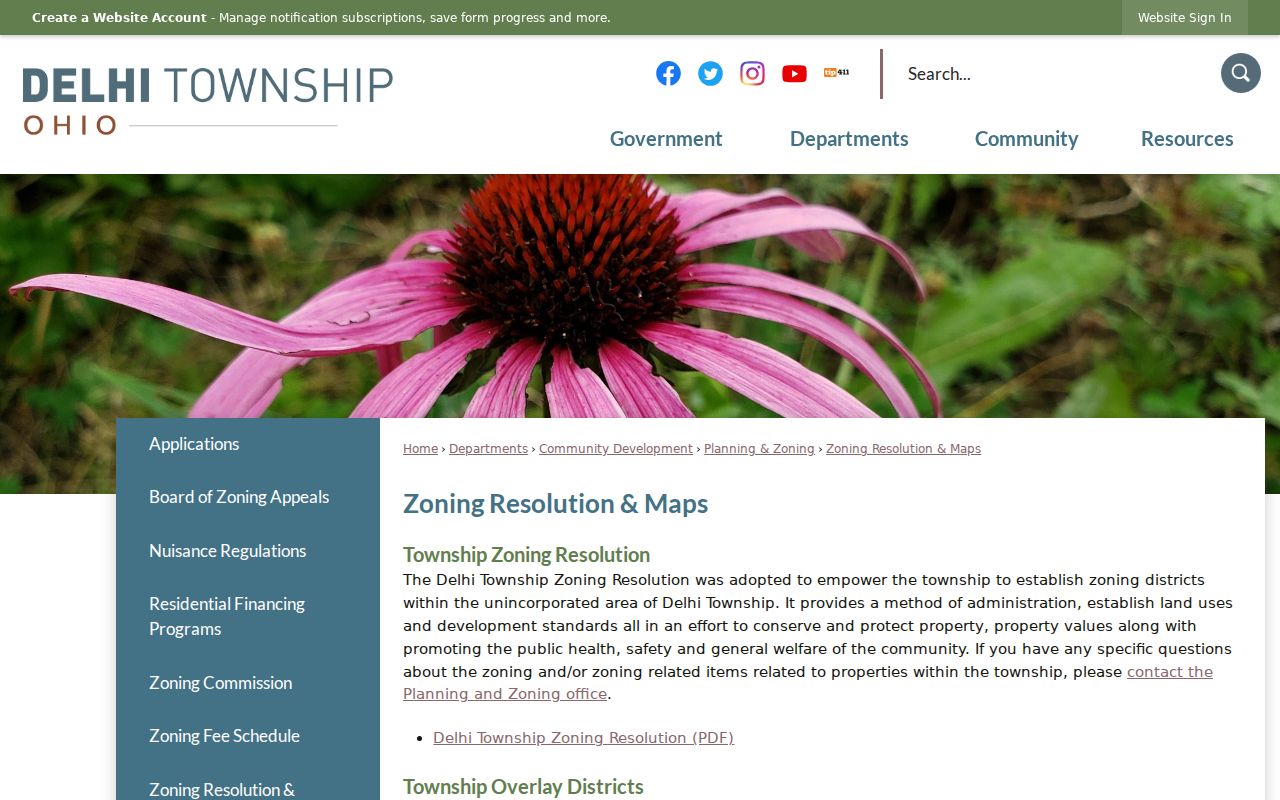
The image is useful as a route marker: map context helps orient a street search, while the Auditor and Recorder provide the address-linked evidence.
Delhi Township Street Directory History
For a past household question, the Cincinnati & Hamilton County Public Library and Hamilton County Genealogical Society are the historical channels. CHPL's house-history method combines property records, historic directories, newspapers, Sanborn maps, and local research help. Directory pages are dated evidence. They may distinguish a householder, business, address, occupation, or owner/renter notation depending on the volume, but OCR must be checked against the page image.
The historical shelf belongs to the Delhi Township city directory record path. Here, its narrow role is to corroborate an address in a stated year after the parcel and legal description are understood. Cincinnati directories begin in 1819, Hamilton County volumes include several late nineteenth- and early twentieth-century runs, and county-outside-city material can be especially useful, but a collection title must not be treated as automatic Delhi Township coverage.
CHPL genealogy and local history services support the image-first approach for older address entries.
The Auditor's property-search guidance is the source shown here.
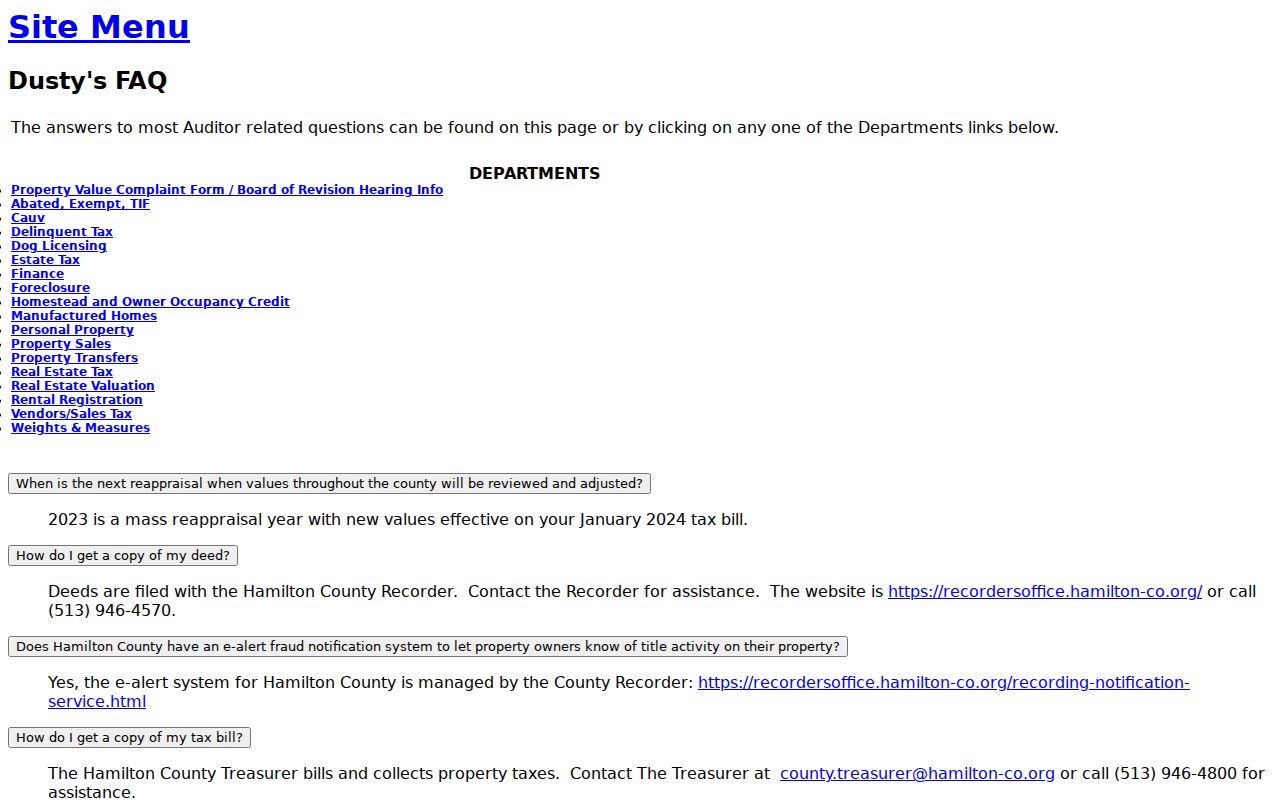
The Auditor guidance reinforces the page's central distinction: property and transfer fields need to be read as property records, not as a directory of occupants.
Delhi Township Street Record Sources
The Recorder and township pages add useful context when an address search leaves the property card. Acclaim indexes recorded documents and provides available images, while Planning & Zoning maintains public administrative material connected to addresses. Record the source date and the address form used for every finding. It makes a later recheck possible when a street label, transfer, or portal result changes.
This Recorder search form is the parcel-focused bridge from a wEdge result to a recorded instrument.
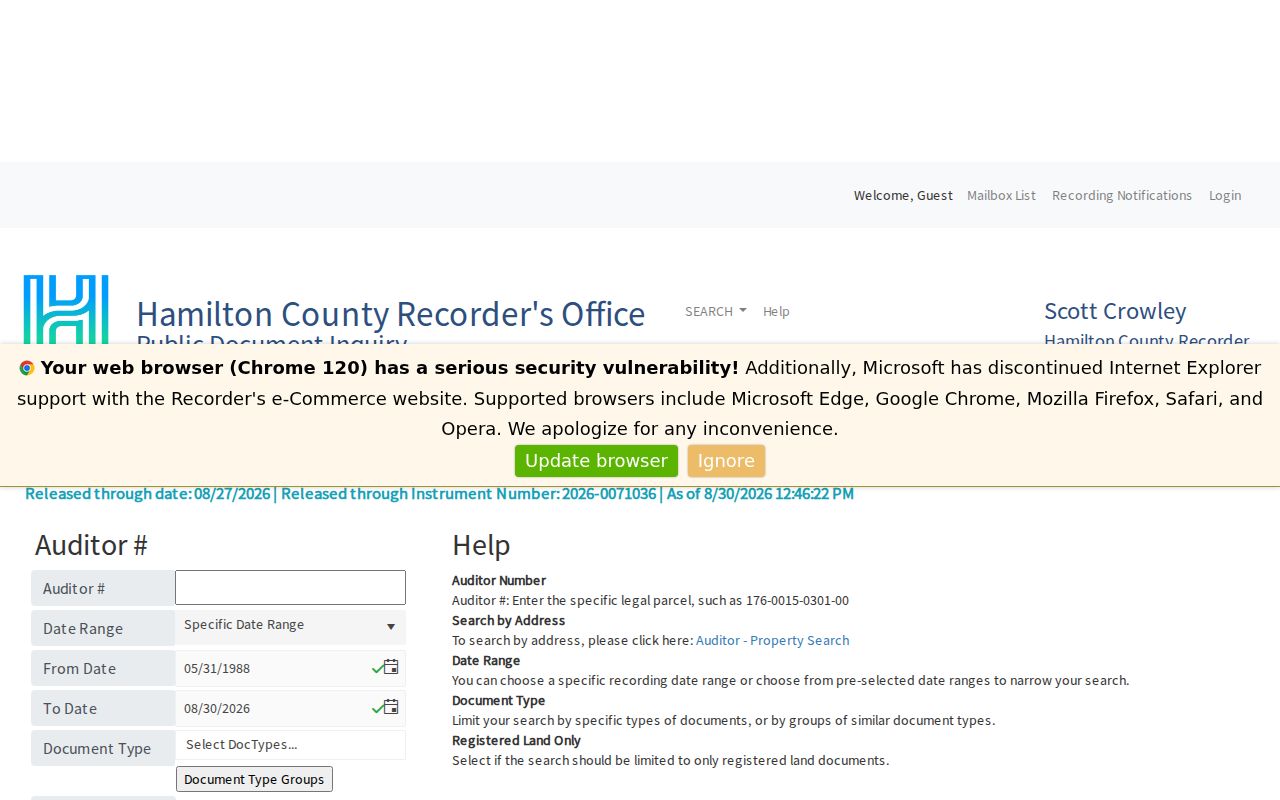
Use the Auditor number or the document references from the property card before broadening a Recorder search.
Delhi Planning and Zoning information identifies the township office for zoning and subdivision context.
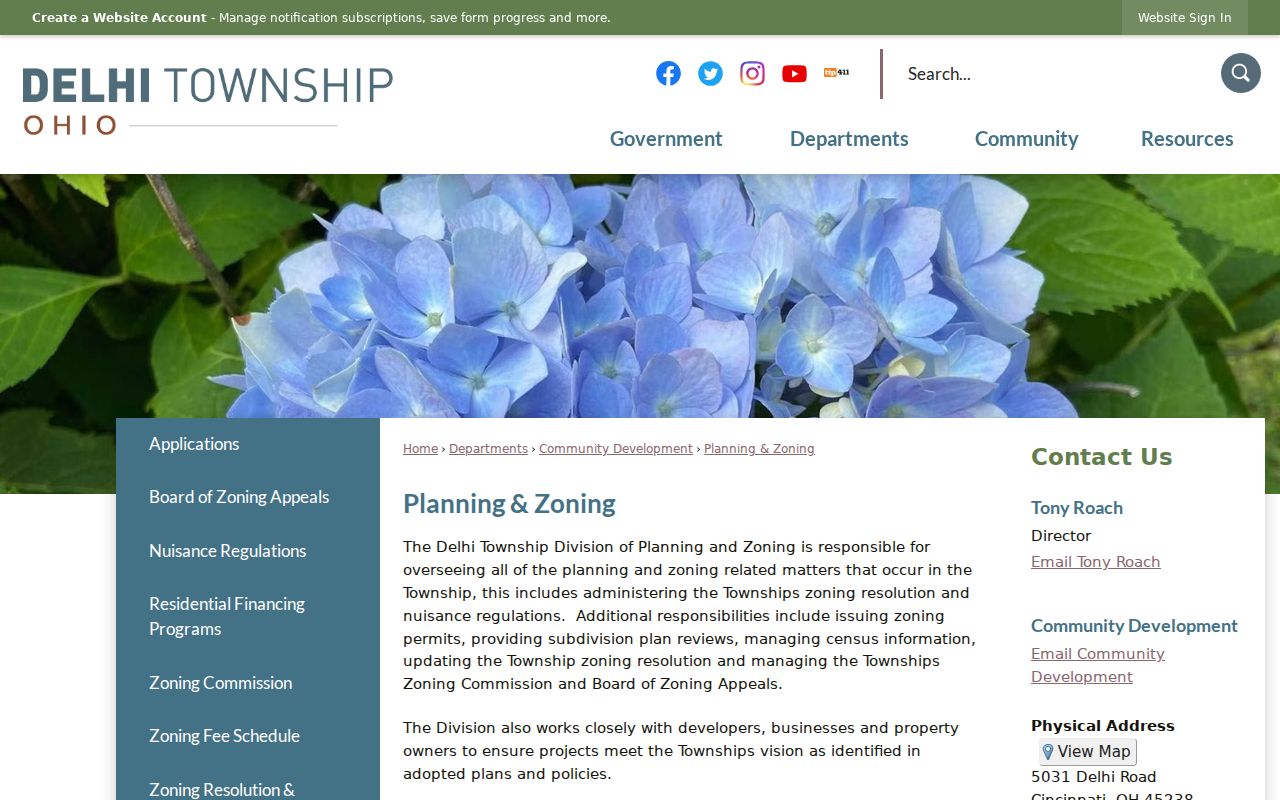
Planning records can date a defined public application or review, though roles on a form are not occupancy evidence.
The historic deed-book search guide explains why an older address trail can require book and page research.
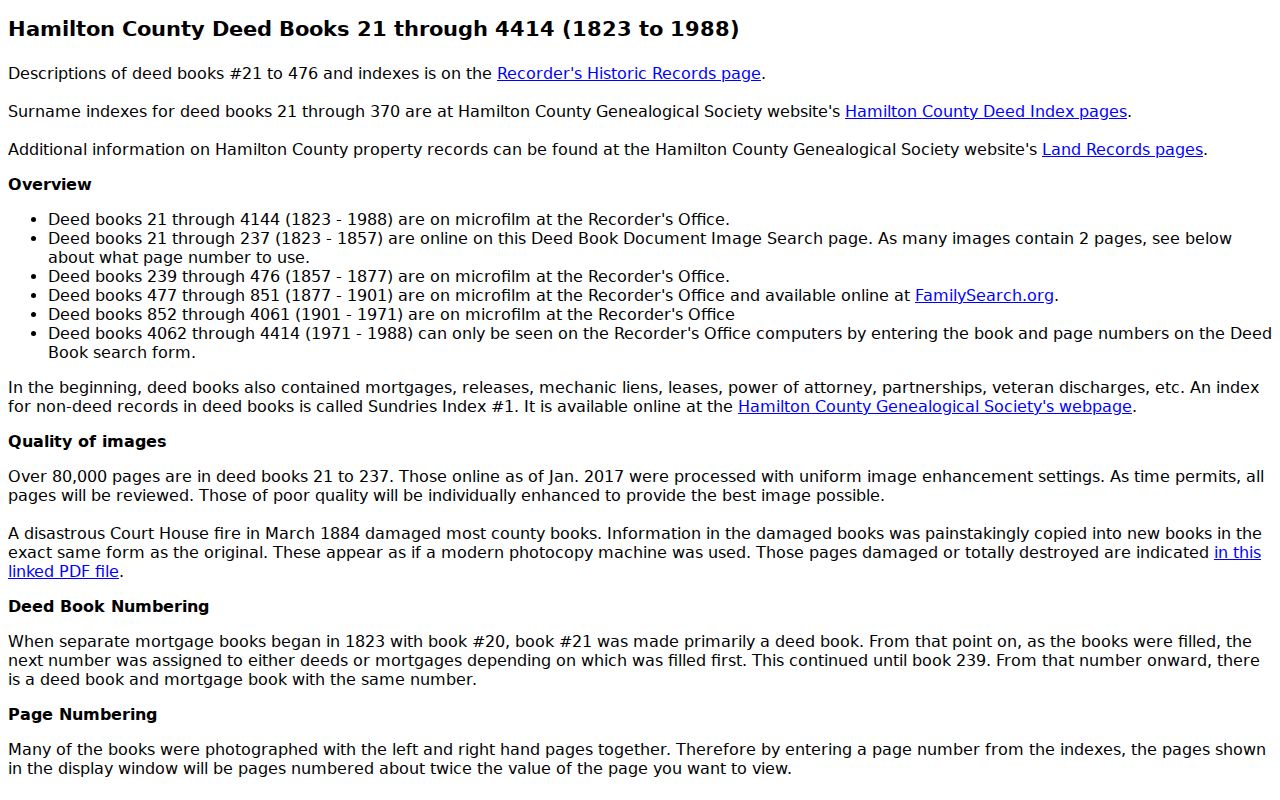
Historic book ranges and preservation formats determine the next access channel for a Delhi Township address.
Limits of a Delhi Township Street Directory
A parcel owner, a tax mailing address, a deed party, and a dated directory entry describe different relationships. None is a verified list of all people currently at an address. Renters, household members, utility customers, delivery data, vehicle records, private cameras, and social relationships are not a public roster. Election information also excludes protected data and never reveals ballot choices.
Ohio Safe at Home and statutory redaction rules can protect addresses. If an online public record appears to need correction or redaction, contact the official custodian through its process rather than copying the information elsewhere. Court sealing, adoption protections, medical privacy, and confidential investigations can impose further limits.
Lawful use. Delhi Township street records are for careful personal, family-history, estate, property, and civic research. Do not use an address trail to watch, harass, threaten, or harm anyone.